Healthcare Compliance in 2026: Lessons from the DOJ's Record-Breaking Fraud Takedown

Kelli Ngariki • July 9, 2026

The largest healthcare fraud investigation in U.S. history offers valuable compliance lessons for small medical and dental practices. Here's what every practice owner and office manager should know.
Transcript


Think the Department of Justice only investigates giant healthcare corporations?


Think again.


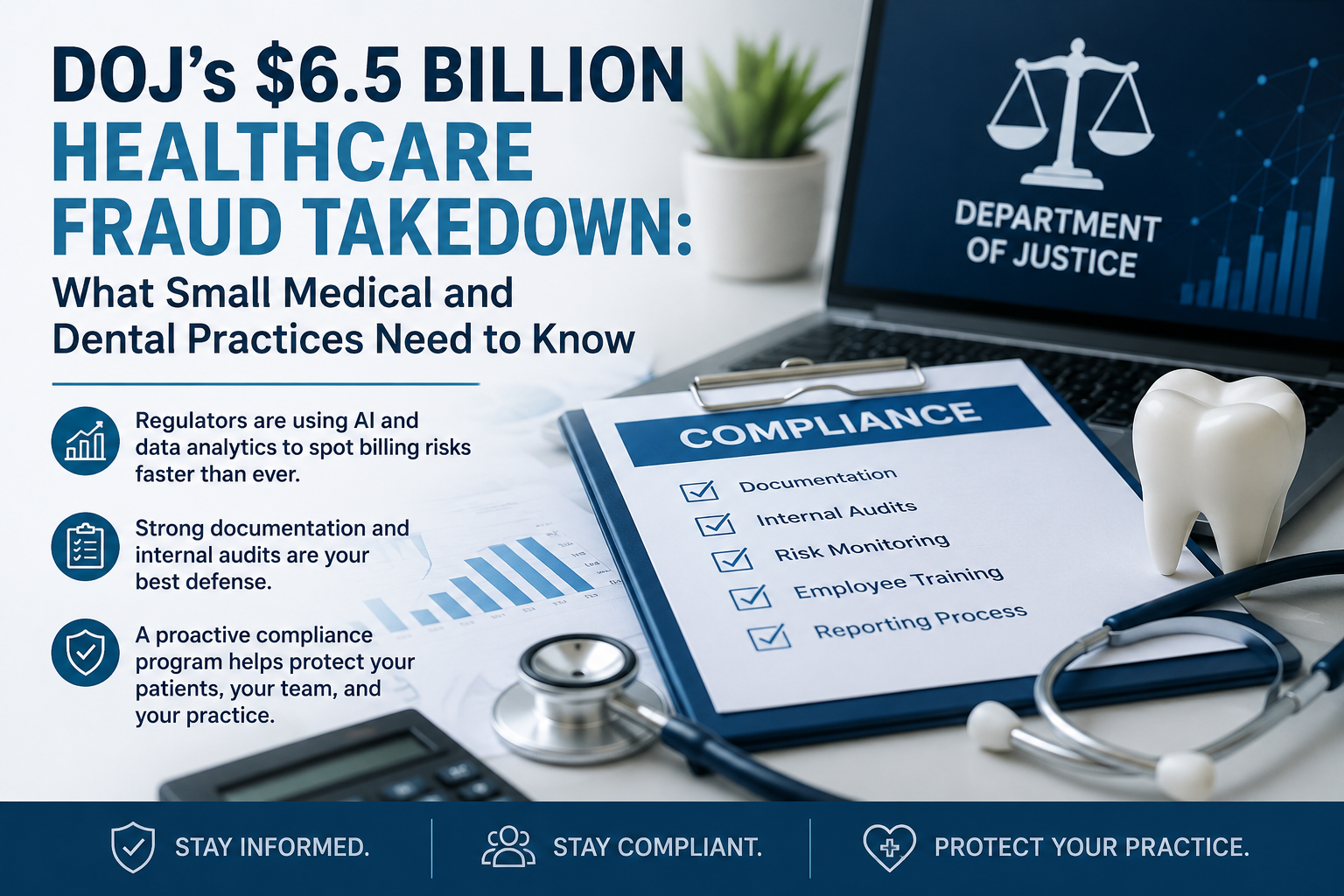
The DOJ recently announced the largest healthcare fraud takedown in U.S. history—more than $6.5 billion in alleged fraudulent claims. While this case focused on large fraud schemes, there's an important lesson for every small medical and dental practice.


I'm Kelli with Healthcare Compliance Associates, and in the next few minutes, I'll explain what this means for your practice, why regulators are using AI to identify billing concerns faster than ever, and four practical steps you can take today to strengthen your compliance program.


DOJ Announces Largest Healthcare Fraud Takedown in U.S History

First, don't panic. Most small practices are doing their best to provide quality patient care and bill accurately.

The biggest takeaway isn't the dollar amount. It's how investigators are finding potential fraud. Government agencies now have access to sophisticated technology that can analyze enormous amounts of billing data much faster than ever before.

That means documentation and compliance have become even more important. 


Compliance Is Becoming More Data-Driven

First, let's talk about what's really changing.

Years ago, investigations often started because of complaints or random audits.

Today, regulators can compare billing data across thousands of providers using advanced analytics.


They're looking for patterns such as:

  • unusual coding,
  • excessive utilization,
  • duplicate claims,
  • services that don't match documentation,
  • or billing that's significantly different from similar providers.


Now, that doesn't mean every unusual pattern is fraud.

But it can mean your practice receives additional scrutiny.

And if that happens, your documentation needs to clearly support every service you bill.


Documentation Is Your Best Defense

Technology may identify an unusual billing trend—but your patient records explain why the care was appropriate.


Every chart should clearly support:

  • Medical or dental necessity
  • Services actually performed
  • Accurate coding
  • Complete clinical notes
  • Appropriate signatures and dates


Example:

If an auditor can't connect your documentation to the services billed, your practice could face unnecessary questions—even if the issue was simply incomplete documentation.

The good news?

Strong documentation is still one of the best ways to demonstrate compliance.


Compliance Concerns Should Never Sit on a Shelf

Another important lesson from recent DOJ guidance is how organizations respond when concerns are raised.

If an employee reports:

  • a coding concern
  • a documentation issue
  • possible HIPAA violation,
  • billing error,
  • or another compliance concern— 


 Don't ignore it.


Instead:

  • Document the concern.
  • Investigate it promptly.
  • Preserve relevant records.
  • Document any corrective action.
  • Consult legal counsel if significant legal issues are identified.


A prompt response not only helps solve problems early—it also demonstrates that your organization takes compliance seriously.


Compliance Isn't Once a Year

This is where many small practices struggle.

Compliance isn't just annual OSHA training or updating HIPAA policies.

Strong compliance becomes part of everyday operations.


That means regularly:

  • reviewing documentation
  • performing internal billing audits,
  • educating staff
  • updating policies,
  • and following up on identified issues


Many practices use spreadsheets to manage these activities—and that's perfectly fine.

The important question isn't what software you use.

It's whether you can quickly demonstrate that compliance activities are actually happening.


Four Action Steps

If you're wondering where to start, here are four simple things you can do this month.


1.    Review a sample of recent patient charts.

Make sure documentation supports every billed service.

2.    Make sure employees know how to report compliance concerns.

People should feel comfortable speaking up.

3.    Review any unresolved compliance issues.

Document what was done to address them.

4.    Schedule routine internal audits.

Don't wait until an outside auditor finds the problem first.


Small improvements made consistently are far more effective than scrambling after an audit.


Final Takeaway

So what's the bottom line?

The DOJ's healthcare fraud takedown isn't a reason for honest healthcare providers to panic.

It's a reminder that healthcare compliance is becoming increasingly data-driven.

Fortunately, the fundamentals haven't changed.

Focus on:

  • strong documentation,
  • regular internal reviews,
  • ongoing staff education,
  • prompt investigation of concerns,
  • and continuous improvement.


Those are the habits that help protect both your patients and your practice.


Watch the full video here: https://youtu.be/7GVz65u-N1E

By Kelli Ngariki June 18, 2026
If OSHA walked into your dental or healthcare office tomorrow, would your team know what to do?
By Ayana Guzzino May 12, 2026
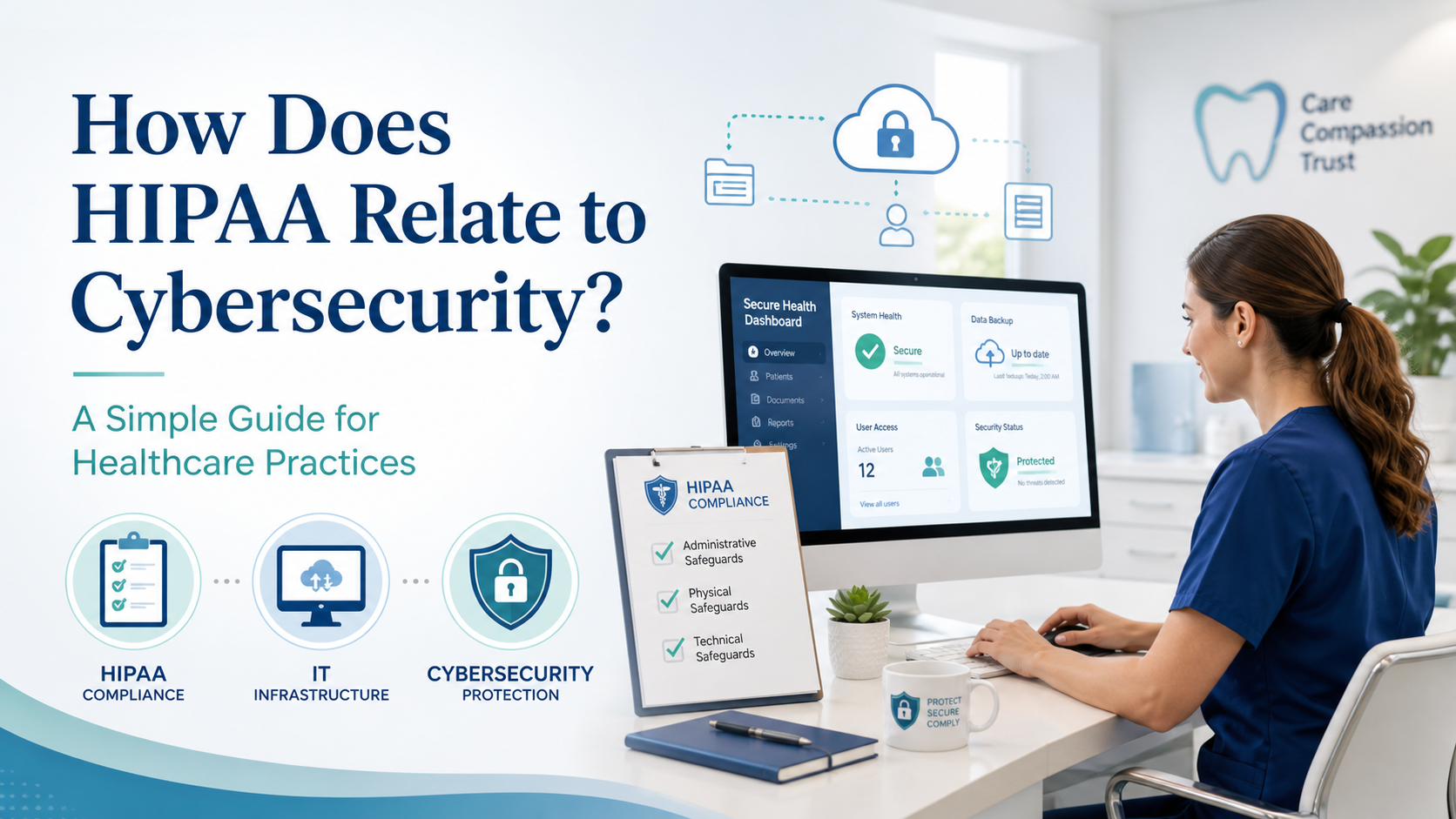
HIPAA, IT, and Cybersecurity: What Healthcare Teams Need to Know
HIPAA Compliance for Healthcare Practices
By Kelli Ngariki April 21, 2026
HIPAA Compliance for Healthcare Practices starts with identifying hidden gaps. Learn the 3 hidden compliance gaps commonly found and how to address them.
By Kelli Ngariki April 14, 2026
Small dental and healthcare clinics have enough on their plate without worrying about OSHA citations. Beyond avoiding fines, workplace safety is essential for protecting your team and fostering a culture of care, responsibility, and professionalism. Whether you’re new to managing compliance or just need a refresher, here are five key OSHA must-haves for 2025: 1. Bloodborne Pathogens & Sharps Safety Train annually (yes, every year!) on how to handle exposure risks Keep a current Exposure Control Plan Offer the hepatitis B vaccine series and document refusals Ensure every employee with face-to-face patient contact has a documented TB test, as required for healthcare settings 2. Hazard Communication Make sure your team knows where SDS sheets are stored and how to read them Label secondary containers clearly Train new staff on chemical hazards—before their first exposure 3. PPE Use and Fit Gloves, eye protection, masks, gowns: who wears what, and when? Train staff on how to properly don and doff PPE Conduct hazard assessments to justify PPE use 4. Emergency Action Plans Fire evacuation, exit routes, and emergency contacts should be posted and known Conduct brief Emergency Action Plan refreshers annually (many offices forget this!) 5. OSHA Documentation & Inspection Prep Keep training logs, incident reports, and written plans accessible Know what to do if an inspector shows up—who talks to them, what documents to provide Bonus: Don’t Let OSHA Be a Surprise Most OSHA citations in small clinics are for things like: Failure to document regular safety meetings Missing training records No exposure control plan Blocked exits Failing to flush eye wash stations Why OSHA Compliance Matters More Than Ever in 2025 OSHA doesn’t have to be overwhelming. With a little preparation and the right tools, you can create a safe, compliant workplace and avoid costly mistakes. Want help with your OSHA binder, policies, or staff training? Reach out—we make compliance doable for busy healthcare teams. This post was drafted with assistance from AI and reviewed by a compliance professional to ensure accuracy and relevance for healthcare practices.
By Kelli Ngariki March 5, 2026
Learn what patching vulnerabilities means for dental and small healthcare practices, who owns it, how often to patch, and what OCR expects after ransomware.
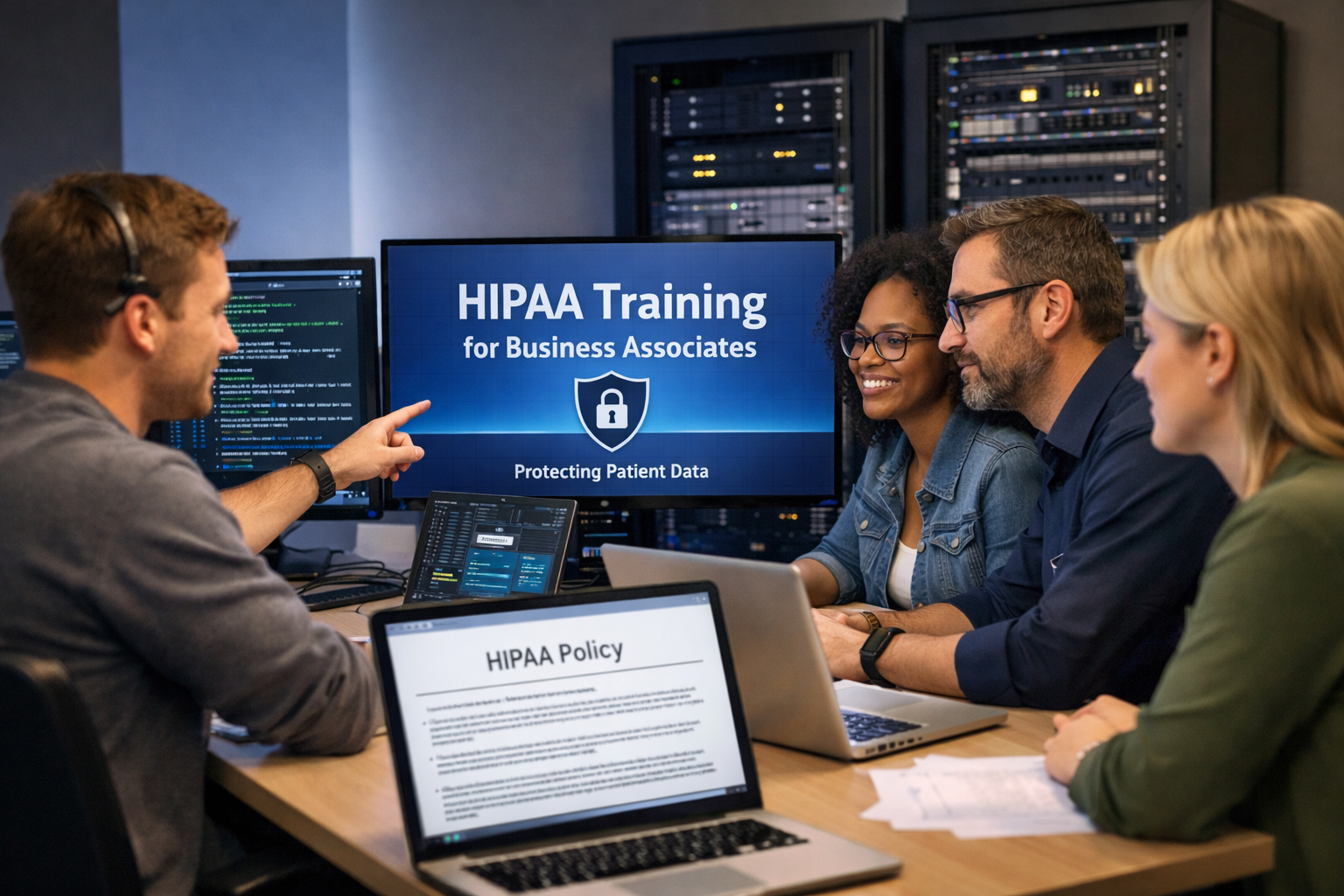
People receiving HIPAA training; a man points to a screen displaying training information. Laptop open, server room in background.
By Kelli Ngariki February 18, 2026
Many tech companies and vendors don't realize HIPAA applies to them. Learn if you're a Business Associate and what training your workforce needs to avoid fines.
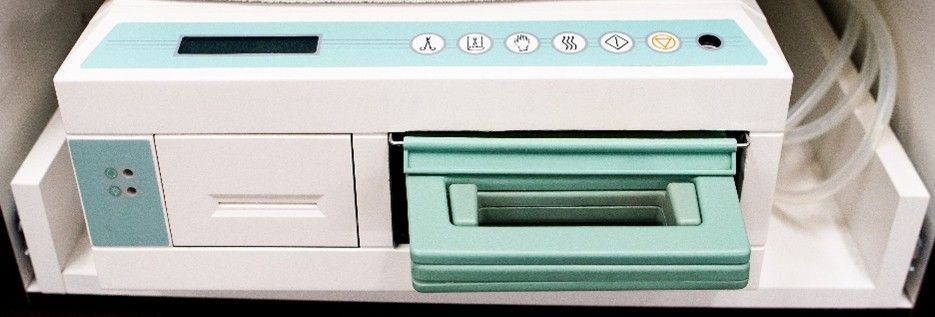
Medical device, white and teal, with a tray and control panel.
By Kelli Ngariki November 24, 2025
In fast-paced dental and medical clinics, it’s tempting to rely on a STATIM sterilizer—a type of immediate-use steam sterilizer—to quickly process instruments. But using this device appropriately is critical to patient safety and regulatory compliance. This post breaks down when and how to use STATIM sterilization based on CDC flash sterilization guidelines, helping small healthcare practices stay compliant without cutting corners. What Is an Immediate-Use Steam Sterilizer (STATIM)? A STATIM sterilizer is a specialized piece of equipment used for immediate-use steam sterilization (IUSS), formerly known as flash sterilization. It’s designed to rapidly sterilize medical and dental instruments that are urgently needed for patient care—not for routine or convenience-based use. When Is It Acceptable to Use a STATIM Sterilizer? According to CDC sterilization standards, STATIM use is acceptable only when: • The instrument is urgently needed and there’s no time to sterilize using standard packaging and storage methods. • It’s not being used to compensate for having too few instrument sets or to save time during busy periods. CDC Guidelines for Flash Sterilization: What You Must Do Following these steps will help you stay compliant with CDC and OSHA infection control requirements: 1. Limit Usage to Urgent Needs Only use STATIM sterilization for instruments needed immediately for patient care. 2. Do Not Use for Convenience Avoid using it as a way to speed up workflow or compensate for inadequate inventory. 3. Thoroughly Clean Instruments First All instruments must be fully cleaned and decontaminated before entering the STATIM cycle. 4. Do NOT Store Unwrapped Items After sterilization, transfer instruments (or handpieces) directly to the point of use in a sterile container or tray. Never store unwrapped items. 5. Use Approved Containers Only Only use flash sterilization containers or trays designed for high-temperature steam. 6. Monitor All Sterilization Cycles • Use biological indicators at least weekly. • Use chemical and mechanical indicators in every STATIM cycle. 7. Prevent Contamination During Transfer Maintain a clean transfer process. Ensure that items aren’t contaminated during handling or transport. Best Practices for STATIM Sterilizer Use in Dental and Medical Clinics • Keep backup instrument sets available to reduce reliance on immediate-use cycles. • Ensure staff are trained on STATIM operation and CDC sterilization protocols. • Document and log every STATIM cycle, including indicator results. • If your clinic is frequently using the STATIM for convenience or to keep up with patient flow, consider investing in an additional autoclave to support proper instrument processing and reduce compliance risks. Learn More from the CDC For detailed guidance on sterilization in healthcare settings, visit the CDC’s official page: πŸ”— CDC Sterilization Guidelines Strong infection control isn’t just about guidelines— it’s about how your dental practice operates day to day. The way instruments are handled, PPE is used, and procedures are carried out in the clinical space affects both infection control and OSHA compliance. Issues in these areas are often identified during OSHA inspections, exposure incidents, or infection control reviews. Our FREE OSHA Compliance Risk Review helps dental practices understand how their safety and infection control efforts are functioning by identifying: Workflow or physical-space issues that may increase exposure risk OSHA gaps related to PPE, training, or exposure controls Areas where OSHA and CDC infection control expectations overlap It’s a simple, no-obligation way to confirm whether your safety systems support both staff protection and patient care. πŸ‘‰ Schedule Your Free OSHA Compliance Risk Review
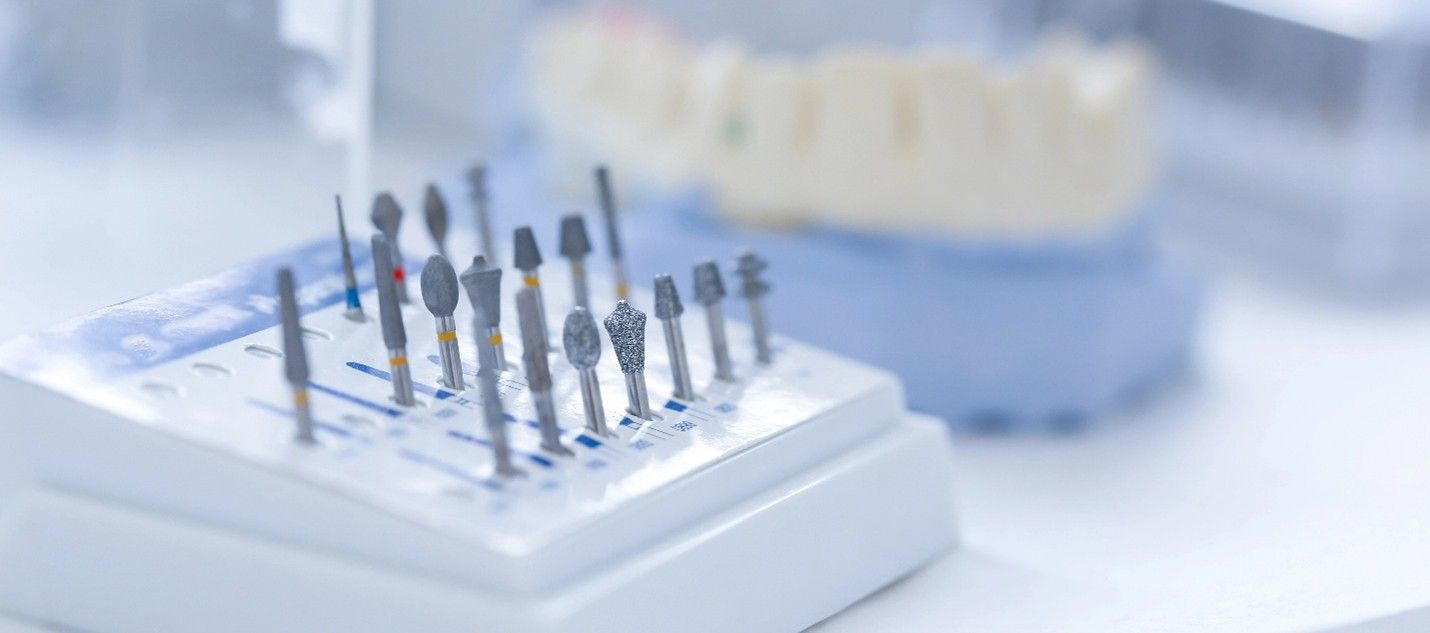
Dental drill bits in a holder, with a dental mold in the background.
By Kelli Ngariki November 18, 2025
If you've ever wondered about the right way to clean and sterilize dental burs, you're not alone. The CDC gives general guidance for sterilizing dental instruments, but doesn’t get into bur-specific details. Regardless of which autoclave you use, the process for burs remains largely the same. Here's how to do it right. The CDC's Take: General Guidelines The Centers for Disease Control and Prevention (CDC) classifies burs as critical or semi-critical instruments, depending on how they’re used. That means they need to be heat sterilized. But before you toss them in the autoclave, they need to be properly cleaned and packaged. Step-by-Step: Best Practices for Burs Here’s how to apply infection control principles in your practice: 1. Identify Your Burs Single-use or Reusable? Check manufacturer instructions. If there are no validated reprocessing instructions, consider the bur single-use and toss it after one use. 2. Pre-clean and Inspect Remove debris immediately after use. Use an ultrasonic cleaner or manually scrub with a detergent or enzymatic solution. Rinse and dry completely. Inspect for damage or wear. If damage, wear, or corrosion: Remove the bur from use (even if minor damage) Discard it in the sharps container For quality control and tracking, consider documenting the discard and the reason. Never try to repair or reuse. 3. Packaging for Autoclaving Best Practice: Use a Bur Holder or Cassette Place burs in a bur block, bur guard, or instrument cassette designed for sterilization. Choose holders that are autoclave-safe (heat-resistant and able to withstand moisture). Then wrap or pouch the holder itself—not the loose burs. Bonus Tip: Some bur blocks come with color-coded or numbered slots so you can standardize bur sets per procedure. If you're using a pouch: make sure the bur holder fits comfortably and the pouch is sealed with chemical indicators inside. Use sterilization pouches or wraps approved for steam sterilization. For small batches, individual pouches work fine. Larger loads can go in wrapped cassettes. Seal all packaging properly and include internal and external chemical indicators. 4. Load Placement in the Autoclave Place pouches paper side up (or follow your pouch manufacturer’s instructions). Don’t overcrowd the trays. Allow space between items. Do not let pouches or cassettes touch the chamber walls. Cassettes should be placed horizontally unless your autoclave manual says otherwise. 5. Choose the Right Cycle Pick the cycle that matches your packaging: "Pouches," "Wrapped Cassettes," or similar. Make sure to allow full drying time to prevent moisture-related contamination. 6. Post-Sterilization Handling Let packs cool and dry fully before handling. Store in a clean, dry area away from sinks or contamination zones. Reprocess any items in compromised packaging. A Note on Sterility and Performance Burs are small and intricate, making them tricky to clean. Over time, reusing them can reduce cutting efficiency and increase the risk of breakage. Keep track of how often burs are reused and inspect regularly. Documentation Matters Make sure your infection control manual includes: Bur inventory (type and classification) Manufacturer instructions for cleaning and sterilization Step-by-step packaging and sterilization protocol Inspection and discard criteria Final Thoughts Using your autoclave the right way means following a solid protocol: proper cleaning, smart packaging, and correct cycle selection. When in doubt, refer to the bur manufacturer's IFU and document everything. Ready to Step Up Your Compliance Game? Book a Compliance Risk Review with us today. We'll evaluate your sterilization protocols, OSHA readiness, HIPAA safeguards, and infection control practices to make sure your office is fully protected and audit-ready. Don’t wait for an inspector to find the gaps—let’s fix them now. Call Lindsay at 541-345-3875 ext. 3 .
why-bleach-should-never-be-used-in-dental-unit-waterlines-blog
By Kelli Ngariki November 3, 2025
The Temptation: “Bleach Kills Everything… Right?” When biofilm builds up in dental waterlines, it’s tempting to grab that familiar bottle of bleach and think, “This will take care of it.” But here’s the truth: while bleach does kill bacteria, it can also damage your equipment, corrode your lines, and void your warranties—all while failing to meet the requirements set by the CDC and EPA for dental unit waterline treatment. The Science: Why Bleach Fails the DUWL Test Dental waterlines are delicate systems that require a balance of disinfection, safety, and equipment compatibility. Here’s why bleach (sodium hypochlorite) doesn’t belong anywhere near them: Not EPA-Registered for DUWLs: The EPA maintains a list of antimicrobial products approved for dental unit waterline use. Bleach isn’t on it. Using an unregistered product puts your practice out of compliance and at risk during inspections. Corrosive to Dental Equipment: Bleach corrodes metal fittings, valves, and plastic tubing, leading to leaks and costly repairs. It also degrades O-rings and adhesives inside the dental unit—issues that can cause long-term system failure. Doesn’t Rinse Cleanly: Bleach leaves chemical residues that are difficult to flush completely, creating a potential safety hazard for both patients and staff. No Validated Instructions for Use (IFUs): Without IFUs for dilution or contact time, there’s no safe way to know how much bleach (if any) could be used without harming your unit—or your patients. The Safer, Smarter Way to Shock and Maintain Your DUWLs To eliminate biofilm safely, choose EPA-registered products that are specifically formulated for dental waterlines and validated by equipment manufacturers. Common and trusted options include: Hydrogen peroxide–based systems (e.g., ProEdge Liquid Ultra, Sterilex Ultra, Mint-A-Kleen) Silver-ion systems (continuous maintenance tablets) Iodine or peracetic acid formulations These products are tested for: Compatibility with dental materials Safety for patients and staff Proven effectiveness against biofilm Real-World Lessons: Quick Fixes = Costly Problems One hygienist shared her experience: “We tried diluted bleach as a quick shock because we were low on supplies. Two weeks later, we failed our waterline test—and had to reschedule four patients.” Shortcuts might seem efficient, but they often result in failed water tests, system repairs, and frustrated patients. Best Practices for Dental Waterline Compliance Follow the manufacturer’s instructions for use (IFU) for your dental unit and treatment product. Perform a shock treatment as recommended (typically quarterly or after test failures). Use a continuous treatment product between shocks. Test monthly or per IFU, or state and CDC guidance to ensure ≤ 500 CFU/mL. Key Takeaway Bleach belongs in your laundry room, not in your dental unit waterlines. By using approved products and consistent testing, your practice can stay safe, compliant, and confident—without risking costly equipment damage or failed inspections. Want Help Simplifying Your DUWL Protocols? At Healthcare Compliance Associates, we help dental teams across Oregon develop waterline maintenance programs that pass testing the first time—every time. πŸ‘‰ Contact us today to schedule a compliance consultation or waterline protocol review. 541-345-3875 πŸ“ž www.oshahipaatraining.com
Finger with a drop of blood and a syringe, likely for blood sampling or injection, on a white background.
By Kelli Ngariki October 30, 2025
Needlestick or sharps injury at work? Learn when and why you're required to file a workers’ comp claim — and how it ties into OSHA compliance.