Is TB Testing Required for Dental Employees in Oregon?
Kelli Ngariki • April 11, 2025
Everything Your Clinic Needs to Know About Oregon’s TB Rules
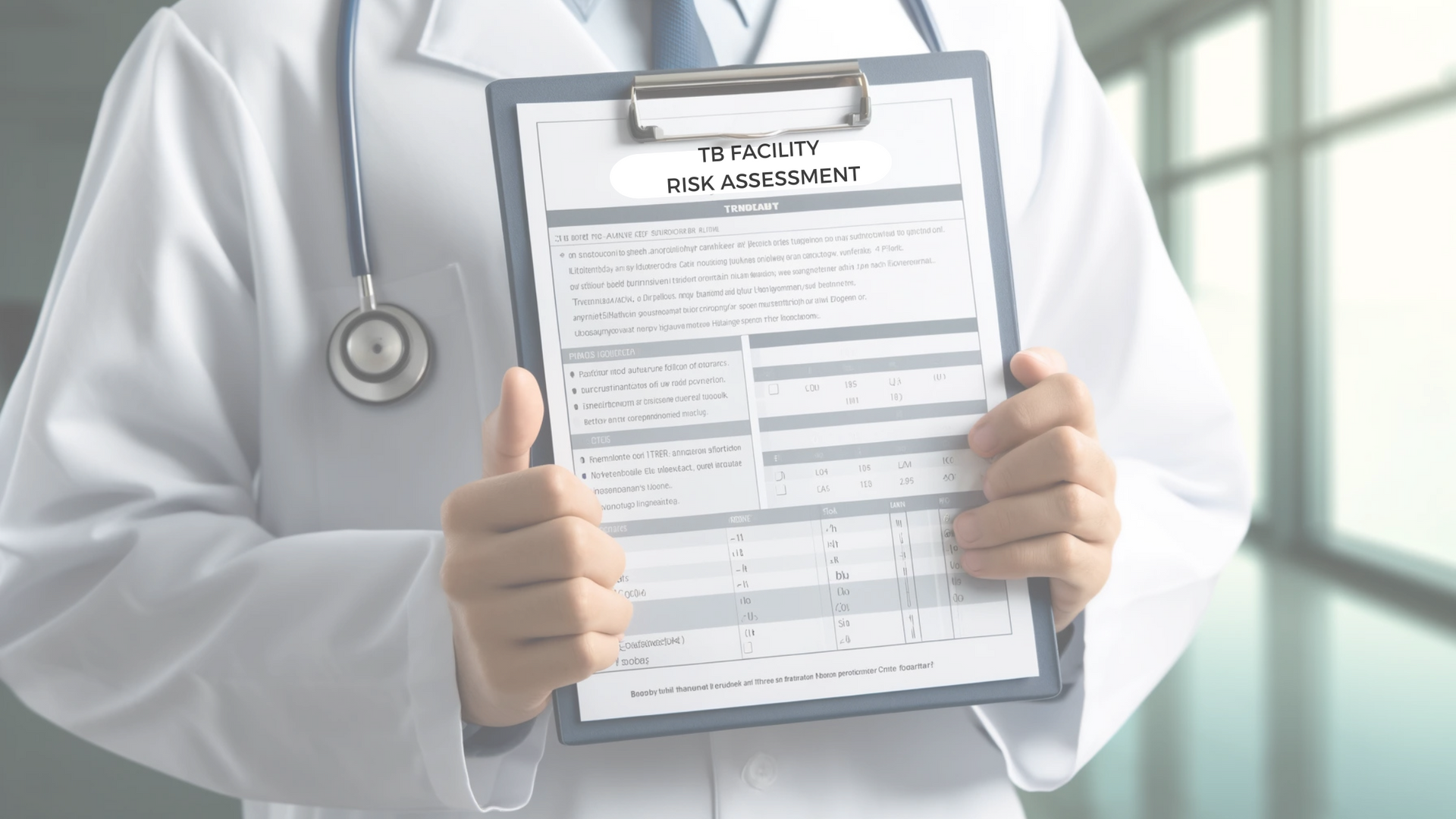
The release of the 2024 Oregon Community TB Profile
means it’s time to update your required
TB Facility Risk Assessment form.
If this is the first time you’re hearing about this requirement—no worries. We’ve got you covered! Keep reading to learn what’s required and how to stay compliant with confidence.
The Requirement for Healthcare (Including Dental) Clinics in Oregon
The Oregon Health Authority (OHA)
requires all healthcare and outpatient clinics—including dental practices—to meet specific TB compliance standards.
What This Means for YOU
To stay compliant, your clinic must have:
- An annually updated TB Facility Risk Assessment(using the most up-to-date Oregon Community TB Profile)
- Healthcare personnel screening and documentation at the time of hire
- A written TB Exposure Control Plan with clear roles, responsibilities, and protocols
What Happens If You Skip This Step
Failing to complete your TB Facility Risk Assessment may seem minor—but it’s a required part of annual compliance for all healthcare and outpatient clinics in Oregon, including dental practices. Here’s what your clinic could face if this step is missed:
- Citations or fines from OSHA: Inspectors may request your TB risk assessment, employee screening records, and written exposure control plan. If anything is missing, your clinic could be cited for non-compliance.
- Increased inspection scrutiny: Missing documentation can trigger broader reviews into your compliance program—leading to more time, paperwork, and potential violations.
- Reputation and trust issues: Even small oversight can reflect poorly on your clinic’s commitment to safety. Being prepared shows your patients and staff that you take compliance seriously.
Whether your clinic is high-risk or low risk, you're required to assess, document, and maintain a TB compliance plan every year.
Staying current protects your license, your team, and your reputation.
Make Sure Your Clinic Is Fully Covered—No Gaps, No Guessing
Getting compliant doesn’t have to be overwhelming. At
Healthcare Compliance Associates (HCA), we help Oregon clinics simplify OSHA, infection control, and HIPAA compliance—starting with one quick call.
Here’s what to expect:
- Book a Discovery Call: We’ll ask a few questions to understand how your clinic currently handles compliance.
- Identify hidden gaps: Walk away with clear, actionable strategies to boost safety, efficiency, and full compliance.
- Relax: We'll handle the rest. 😊
You shouldn’t have to second-guess your compliance program. We’ll help you get clear, confident, and covered—so you’re ready for whatever comes your way. 👉 Schedule Your Call TODAY!
Sources:
- Tuberculosis Screening, Testing, and Treatment of U.S. Health Care Personnel: Recommendations from the National Tuberculosis Controllers Association and CDC, 2019
- TB Screening, Testing and Treatment of Oregon Health Care Personnel Webinar (YouTube) July 2019
- Facilities Required to Test New Employees for Tuberculosis upon Hire (pdf)
- Latent Tuberculosis Infection (LTBI)
If a needlestick happened today, would your team know exactly what to do next—or lose critical time figuring it out?
Small compliance mistakes can lead to big consequences. Learn what to watch for and how to protect your practice.
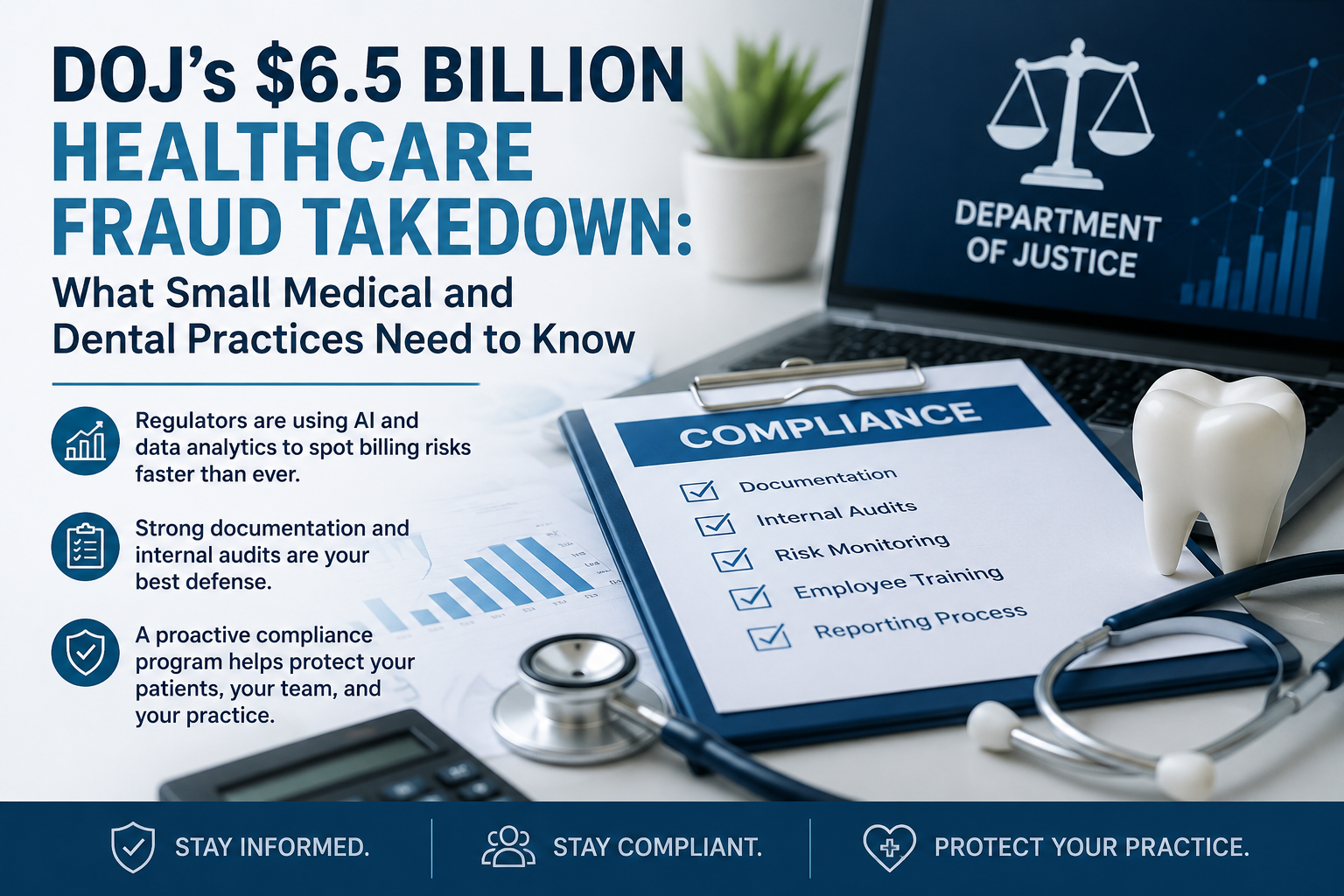
The largest healthcare fraud investigation in U.S. history offers valuable compliance lessons for small medical and dental practices. Here's what every practice owner and office manager should know.
If OSHA walked into your dental or healthcare office tomorrow, would your team know what to do?
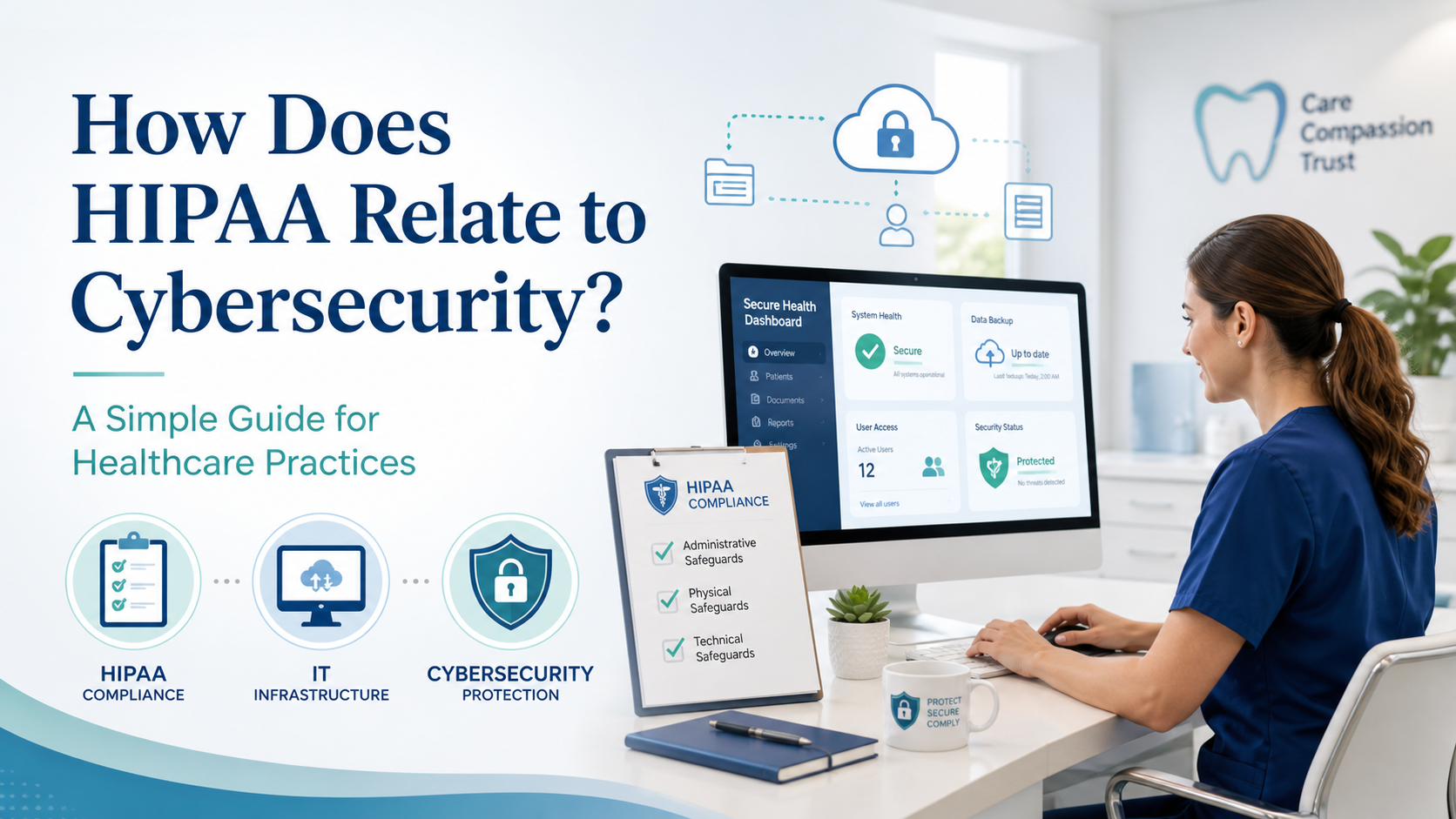
HIPAA, IT, and Cybersecurity: What Healthcare Teams Need to Know
HIPAA Compliance for Healthcare Practices starts with identifying hidden gaps. Learn the 3 hidden compliance gaps commonly found and how to address them.

Small dental and healthcare clinics have enough on their plate without worrying about OSHA citations. Beyond avoiding fines, workplace safety is essential for protecting your team and fostering a culture of care, responsibility, and professionalism. Whether you’re new to managing compliance or just need a refresher, here are five key OSHA must-haves for 2025: 1. Bloodborne Pathogens & Sharps Safety Train annually (yes, every year!) on how to handle exposure risks Keep a current Exposure Control Plan Offer the hepatitis B vaccine series and document refusals Ensure every employee with face-to-face patient contact has a documented TB test, as required for healthcare settings 2. Hazard Communication Make sure your team knows where SDS sheets are stored and how to read them Label secondary containers clearly Train new staff on chemical hazards—before their first exposure 3. PPE Use and Fit Gloves, eye protection, masks, gowns: who wears what, and when? Train staff on how to properly don and doff PPE Conduct hazard assessments to justify PPE use 4. Emergency Action Plans Fire evacuation, exit routes, and emergency contacts should be posted and known Conduct brief Emergency Action Plan refreshers annually (many offices forget this!) 5. OSHA Documentation & Inspection Prep Keep training logs, incident reports, and written plans accessible Know what to do if an inspector shows up—who talks to them, what documents to provide Bonus: Don’t Let OSHA Be a Surprise Most OSHA citations in small clinics are for things like: Failure to document regular safety meetings Missing training records No exposure control plan Blocked exits Failing to flush eye wash stations Why OSHA Compliance Matters More Than Ever in 2025 OSHA doesn’t have to be overwhelming. With a little preparation and the right tools, you can create a safe, compliant workplace and avoid costly mistakes. Want help with your OSHA binder, policies, or staff training? Reach out—we make compliance doable for busy healthcare teams. This post was drafted with assistance from AI and reviewed by a compliance professional to ensure accuracy and relevance for healthcare practices.
Learn what patching vulnerabilities means for dental and small healthcare practices, who owns it, how often to patch, and what OCR expects after ransomware.
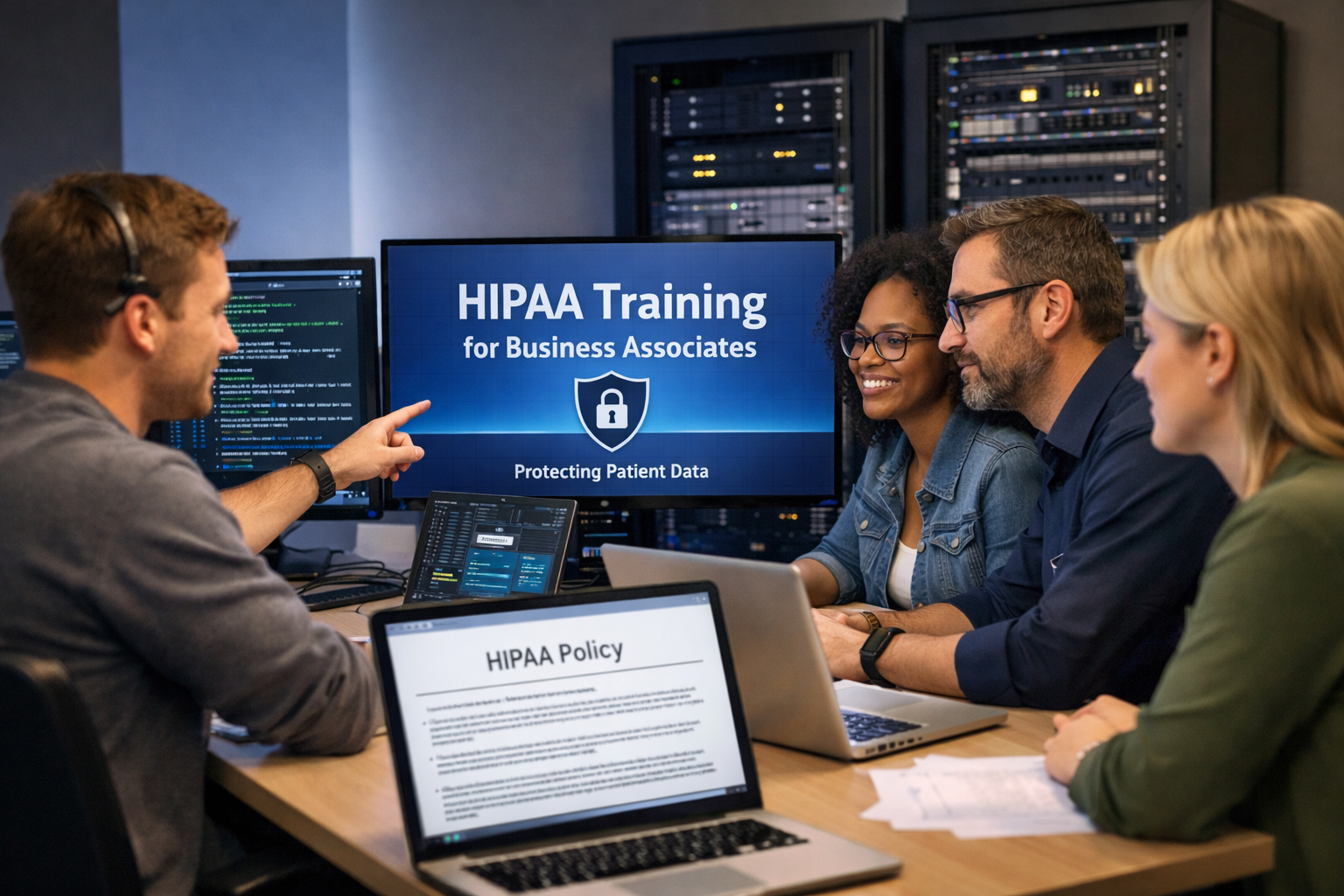
Many tech companies and vendors don't realize HIPAA applies to them. Learn if you're a Business Associate and what training your workforce needs to avoid fines.
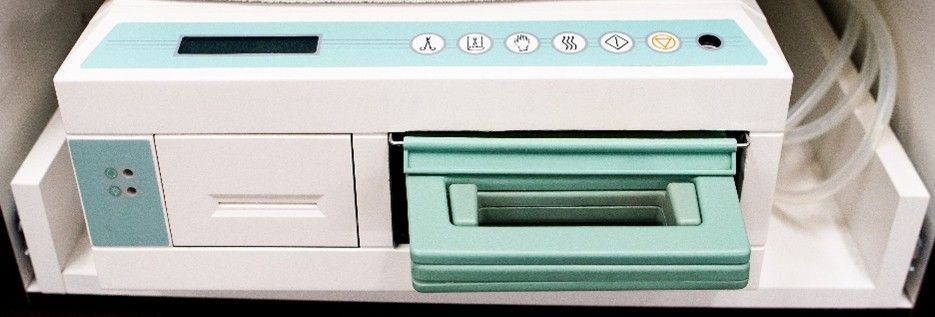
In fast-paced dental and medical clinics, it’s tempting to rely on a STATIM sterilizer—a type of immediate-use steam sterilizer—to quickly process instruments. But using this device appropriately is critical to patient safety and regulatory compliance. This post breaks down when and how to use STATIM sterilization based on CDC flash sterilization guidelines, helping small healthcare practices stay compliant without cutting corners. What Is an Immediate-Use Steam Sterilizer (STATIM)? A STATIM sterilizer is a specialized piece of equipment used for immediate-use steam sterilization (IUSS), formerly known as flash sterilization. It’s designed to rapidly sterilize medical and dental instruments that are urgently needed for patient care—not for routine or convenience-based use. When Is It Acceptable to Use a STATIM Sterilizer? According to CDC sterilization standards, STATIM use is acceptable only when: • The instrument is urgently needed and there’s no time to sterilize using standard packaging and storage methods. • It’s not being used to compensate for having too few instrument sets or to save time during busy periods. CDC Guidelines for Flash Sterilization: What You Must Do Following these steps will help you stay compliant with CDC and OSHA infection control requirements: 1. Limit Usage to Urgent Needs Only use STATIM sterilization for instruments needed immediately for patient care. 2. Do Not Use for Convenience Avoid using it as a way to speed up workflow or compensate for inadequate inventory. 3. Thoroughly Clean Instruments First All instruments must be fully cleaned and decontaminated before entering the STATIM cycle. 4. Do NOT Store Unwrapped Items After sterilization, transfer instruments (or handpieces) directly to the point of use in a sterile container or tray. Never store unwrapped items. 5. Use Approved Containers Only Only use flash sterilization containers or trays designed for high-temperature steam. 6. Monitor All Sterilization Cycles • Use biological indicators at least weekly. • Use chemical and mechanical indicators in every STATIM cycle. 7. Prevent Contamination During Transfer Maintain a clean transfer process. Ensure that items aren’t contaminated during handling or transport. Best Practices for STATIM Sterilizer Use in Dental and Medical Clinics • Keep backup instrument sets available to reduce reliance on immediate-use cycles. • Ensure staff are trained on STATIM operation and CDC sterilization protocols. • Document and log every STATIM cycle, including indicator results. • If your clinic is frequently using the STATIM for convenience or to keep up with patient flow, consider investing in an additional autoclave to support proper instrument processing and reduce compliance risks. Learn More from the CDC For detailed guidance on sterilization in healthcare settings, visit the CDC’s official page: 🔗 CDC Sterilization Guidelines Strong infection control isn’t just about guidelines— it’s about how your dental practice operates day to day. The way instruments are handled, PPE is used, and procedures are carried out in the clinical space affects both infection control and OSHA compliance. Issues in these areas are often identified during OSHA inspections, exposure incidents, or infection control reviews. Our FREE OSHA Compliance Risk Review helps dental practices understand how their safety and infection control efforts are functioning by identifying: Workflow or physical-space issues that may increase exposure risk OSHA gaps related to PPE, training, or exposure controls Areas where OSHA and CDC infection control expectations overlap It’s a simple, no-obligation way to confirm whether your safety systems support both staff protection and patient care. 👉 Schedule Your Free OSHA Compliance Risk Review